How Technology Is Transforming the Student Experience

 17 Sep 2026
 Reading Time : 6 Minutes
Technology is reshaping the student experience through adaptive learning, AI tutors, collaboration tools, flexible digital access, and technology-enabled student services. These tools can make education more personalized, accessible, and convenient, while also creating challenges around privacy, digital access, platform overload, and staff training. The institutions that benefit most are those that combine thoughtful technology adoption with strong support, equitable access, and a clear focus on student needs.
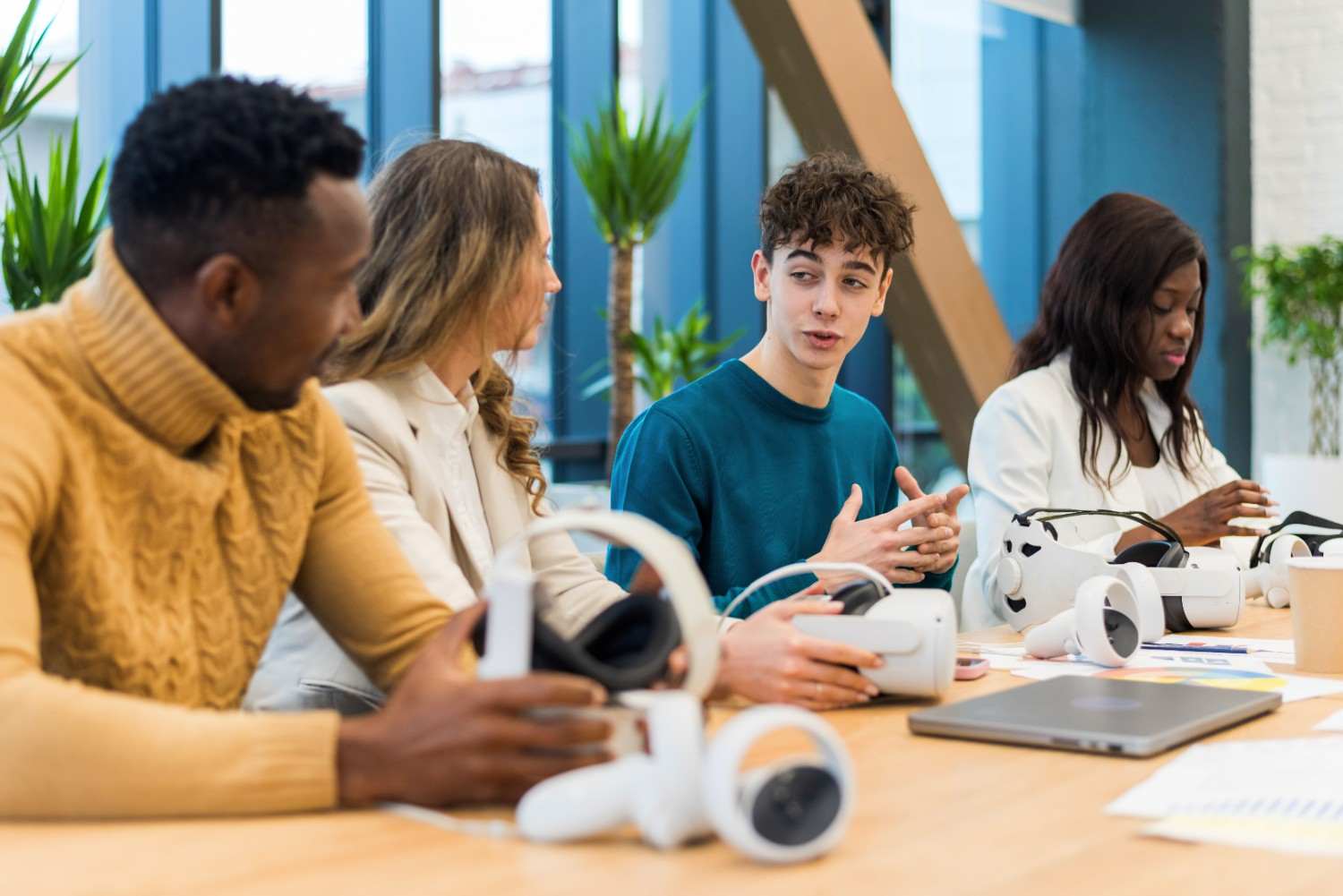
Walk into any classroom in the world today, and what you'll find is half the room looking at the screen. Students are taking notes, flipping through a due date, or doing a quick calculation that their phone could do faster. Technology has not only introduced a few gadgets into school life, but it has changed the way students learn, they receive help, and they experience their education on a day-to-day basis.
None of this happened all at once. It crept in over years, habit by habit. But the scale of it now is hard to ignore. The global EdTech market is expected to land somewhere between $187 billion and $215 billion in 2026, and by recent counts, well over 80% of students worldwide use some kind of AI-assisted tool to study. A generation of students now has a daily routine that looks almost nothing like their parents' did.
Learning That Actually Adjusts to the Student
Most classrooms are still built around one pace for everyone. Thirty students, one lesson plan, one speed: whether you are bored out of your mind or completely lost. Adaptive learning software is the exception to that. It observes a student's performance as they work and adjusts the content as needed: provides additional practice if the student is having difficulty, increases the difficulty if the student is going quickly.
No longer a fringe experiment, this is now a standard experiment. Many K-12 math and reading programs in the U.S. use adaptive tools, as are being adopted in colleges for introductory classes, particularly in courses such as foreign languages and statistics. Studies have shown improvements in test scores of double digits when the teaching method is adjusted to the learner and not the learner to the teaching method. That level of attentiveness can mean the difference between giving up and catching up for a child who used to sit quietly in the back and get farther behind every week.
AI Tutors Don't Keep Office Hours
This is probably the part of the shift people notice most. AI tutoring tools can walk a student through a tricky problem at midnight, right before an exam, when there's no professor or TA anywhere in sight. Writing tools point out awkward sentences or weak arguments in advance of a paper's submission. Even simple chatbots in higher education are handling questions like financial aid deadlines, registration steps, where the library is open late, etc., so staff can get to the hard questions.
Adoption has climbed fast. Recent surveys put weekly AI tool use among students well into the majority, a sharp jump from just a couple of years ago. What's interesting is the mismatch this has created: students are using these tools constantly, but institutional policy hasn't caught up.
Only a small fraction of schools have a clear, published AI usage policy right now. That gap is probably going to be one of the more important EdTech stories over the next couple of years.
Working Together Without Being in the Same Room
Group projects used to mean scheduling headaches. Now a lot of that friction is gone, thanks to a handful of everyday tools:
-
Shared documents that track every edit and who made it.
-
Messaging apps that keep a project moving outside of class time.
-
Cloud storage so nobody's emailing files back and forth at 1 a.m.
-
Video calls for group check-ins when meeting in person is not realistic.
Video conferencing especially has stuck around long after it stopped being a necessity. A large share of college courses now build in some kind of video component:
-
guest speakers dialing in from another country,
-
virtual office hours,
-
hybrid sessions where students can join remotely if they are sick or working.
For commuter students, parents, and anyone juggling a job alongside classes, that flexibility often is not a bonus. It's what makes finishing the degree possible at all.
Flexibility Has a Catch
The most significant change in structure could be something basic, such as students no longer having to be in a room at a certain time to stay "on track. All of that means students can learn while they are on a bus, at lunchtime, or at 6 a.m. before a shift begins.
This flexibility, however, is only possible if there is the basic first, but it is not always the case. A large number of students who come from lower-income families still have intermittent access to the internet or have no device at home to access the internet. Where schools have really worked to enhance students' experience, what they've done is to make internet access and device availability.
The Out-of-Screen Part of Student Life
Learning doesn't only take place in the classroom and in the homework. But scholarships, emergency grants, counselling and mentorship programs, and the systems that enable them to happen, have become digital.
Students directly experience the benefits of a well-functioning backend: a mentoring program that doesn't run out of funding in March, or a need-driven grant that is approved more quickly.
It's easy to think of "student experience" as strictly what happens in a classroom or on a laptop screen. But the financial and operational systems keeping an institution running have a real, if invisible, effect on what that institution can actually offer.
What's Still Broken
None of this is a clean success story. A few things keep coming up:
Tool overload: Students have to log in to almost every class on a different login, and changing between 5-6 platforms a day is a reality.
Student privacy issues: Increasingly more and more student data is passing through third-party applications, and most students have little awareness of where it's going.
Uneven resources: Well-funded schools adopt new tech faster and train staff better. The ones that are under-resourced fall even further behind.
Training gaps: Buying a new platform is easy. Getting every teacher comfortable using it well takes actual time and investment that a lot of schools skip.
Institutions that treat technology as a one-time purchase, rather than an ongoing investment, tend to see that gap grow wider every year.
Conclusion: Where This Is Headed
The student lifestyle 5 years ago is completely different to that of today — and it is not likely to change for the better. This doesn't simply represent a digital copy of the same system. It's increasingly flexible, individualised, and has an atmosphere that extends much further from the classroom walls. The schools getting this right usually are not the ones with the flashiest tools. They are the ones paying attention to access, training their staff properly, and asking whether a given piece of technology actually helps the student in front of them.
That balance between chasing what's new and implementing it thoughtfully is probably what decides the next chapter of this story, for students and the institutions trying to serve them.




Subscribe & get all related Blog notification.




Post your comment