The Role of Simulation and Analytics in Next-Generation Product Development

 26 Dec 2025
 Reading Time : 7 Minutes
Simulation and analytics are now very important tools for developing new products in a market that changes quickly. Companies can come up with new ideas faster, lower risks, and make products that fit real-world demands by allowing virtual testing and data-driven insights. These technologies are necessary for the next generation of product development because they assist make design processes more efficient, promote teamwork, and support sustainability.
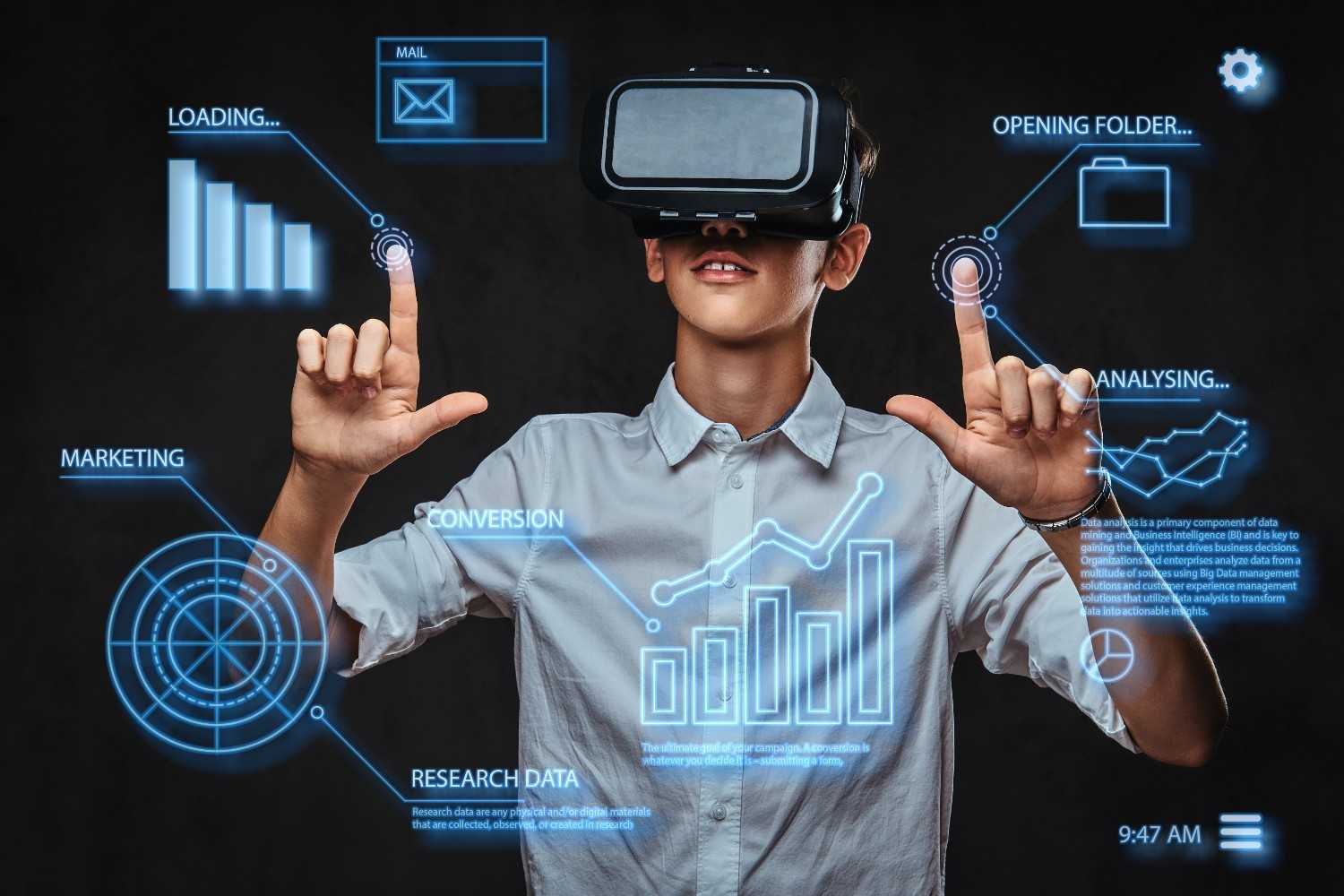
This is a defining time in product development. In a more competitive market than ever, and with increasing demands from consumers, companies can no longer just go on gut feeling or regular prototyping. Today, simulation and analytics — two potent capabilities that enable organizations to predict performance, manage risk and drive innovation long before a product has reached the market —set the course for next generation product development.
Today, simulation software and analytics — two potent capabilities that enable organizations to predict performance, manage risk and drive innovation long before a product has reached the market — set the course for next-generation product development. With data-informed insights included earlier in the development process, enterprises are able to move faster, innovate more intelligently and deliver products which better cater to real-world needs with higher assurance.
Why Product Development Must Change
Products today are more complicated than ever. In industry sectors as diverse as aerospace, automotive, mining and construction, electronics, chemicals and petroleum, we partner with engineers who seek to solve today’s most challenging problems. Such demands are difficult to meet with traditional trial-and-error approaches, which can be time-consuming or costly.
Simulation and analytics offer a fresh angle by permitting virtual experimentation. Rather than creating dozens of physical prototypes, teams are able to pilot thousands of design permutations as digital duplicates and catch potential complications early on, while assuring performance before tapping into production. This adjustment in turn helps in smoothening out the uncertainty and allow more rational decisions.
Understanding Simulation in Product Development
Simulation enables engineers and designers to virtualize models for testing how products will work under real-life conditions. These models can include characteristics of the material being used, environmental factors, tolerances, and manufacturing constraints.
With the ability to perform simulation early in the design process, teams of engineers can consider economic alternatives. Simulating reveals design flaws, measures trade-offs and verifies concepts before physical testing starts. This is particularly useful in industries where failure is expensive or safety-related.
The Growing Importance of Analytics
While simulation is all about predicting behavior, analytics converts raw data into information that drives decisions. In product design, analytics enables teams to make sense of simulated results, prior performance data and operational metrics in making design decisions.
Advanced analysis can find patterns not easily detected, such as the correlation between design tolerances and failure rates or what effect minor variations have on overall performance. These learnings enable them to start being proactive rather than reactive.
The Interplay of Simulation and Analytics
The true benefit of the next generation or product development appears when both simulation and analytics are utilized in tandem. Simulation produces big data, and analytics provides meaning to that data through trends, risks, insights for optimization etc.
This gives teams the confidence to rapidly assess a number of scenarios. Instead of wondering whether a design will work, organizations might wonder how well it will work — under what conditions, and with what certainty. This understanding translated to better products and a reduction in surprises during production.
Reducing Time-to-Market Without Compromising Quality
Speed is indeed a key competitive advantage, but the rush to develop can be expensive. This tension is relieved through simulation and analytics which enable teams to go faster without compromising quality.
Early prototyping and testing Digital testing helps to spot issues that could arise further down the line, minimizing the demand for costly late design changes. Development cycles are shortened, feedback loops are closed faster and products get into the market with less bugs. Both engineering teams and business stakeholders enjoy the benefits of this efficiency.
Enhancing Collaboration Across Teams
The development of next-generation products is a social process. Designers, engineers, manufacturers and business leaders need to converge around common goals and data. That’s where simulation and analytics platforms can facilitate this collaboration by providing a lingua franca for complex data in visual form.
When stakeholders can see how design choices affect performance and cost, discussions are propelled to a new level. Decisions are made based on evidence rather than beliefs, driving alignment between teams and reducing friction during development.
Supporting Innovation Through Virtual Experimentation
Inventiveness often involves going down uncommon routes but trying things out in the real world can be costly and dangerous. Simulation reduces this barrier, allowing for experimentation in the virtual world at scale.
Teams can push the boundaries of what’s possible, try new materials and configurations without a significant initial investment. Analytics then evaluate which ones are the most promising in terms of performance, feasibility and risk. The one nurtures the seed of originality, but against it stands discipline and control.
Learning to Control Risk and Uncertainty better
Every product will always have some risks, pertaining to performance, production or market acceptation. By definition, they all involve some level of risk and uncertainty — simulator and analytics are here to help quantify, manage these risks in a better way.
By analyzing variability and modeling worst-case scenarios, teams can develop more robust and resilient products. This procedure minimizes the risk of unexpected failures and enhances decision makers' confidence, in addition to client's for that matter.
The Role of Tolerance Analysis and Variation Management
Small differences can make a big difference in how products perform across countless sectors. Tolerance analysis driven by simulation enables teams to understand how manufacturing variability impacts results.
It is also this process that the tool of analytics further optimizes through finding which factors matter most and where tighter control must be established. This understanding helps companies better weigh quality against price, and that their services can perform well at scale.
From Engineer’s Tool To Strategic Asset
Simulation and math aren't just technical tools any more. They are now strategic, driving product strategy, investment decisions and long-term competitiveness.
Managers increasingly depend on the power of data to measure trade-offs, and verify feasibility or priorities for development. This transition brings simulation and analytics out of the engineering department and into the boardroom.
Developing Capabilities for the Next Generation of Product Teams
As organizations invest in building these competencies, access to simulation and tolerance analysis training becomes increasingly important for enabling teams to interpret results correctly, manage variation, and apply simulation insights confidently across the product lifecycle.
Organisations who are actively investing in upskilling and retraining have a huge competitive edge. Tools that teach teams more about simulation-led design and analysis methods are also essential to developing this skillset and achieving success in the long-term.
Simulation Driven Design Through Integration of Simulation Early in the Product Lifecycle
Early-stage simulation is one of the key trends in product development for the next generation. No longer waiting until the end of a design, teams use simulation to inform decisions from day one.
This can minimization for rework, linking design to requirement and a more seamless flow from concept-to-production. Early integration also lets that modeled information influence basic design decisions and not merely minor ones.
Effects on Sustainability and Efficiency
Simulation and analytics also support sustainability objectives by enabling lower material waste, energy efficiency, as well as reduced reliance on physical prototypes. In a digital end-to-end process of assessing environmental impact, companies can create products that are high performance and environmentally sound.
If we look further than development, data-driven product design also offers benefits for manufacturing and lifecycle management, adding even more value.
The Future of Product Development
In this technological evolution, simulation and analytics will become smarter and more unified than ever before. Further progress in AI and ML will increase the predictive power, facilitating opportunities for real-time optimization and adaptive design.
Continuous feedback, digital twins and integrated ecosystems where data is moving effortlessly throughout the product lifecycle will determine the way product development will evolve in the future.
Conclusion: Designing Smartly, Quickly, and with Certitude
Simulation and analytics are changing the way products are conceived, engineered, and created. They are what allow for responsible innovation, complexity management & have answers to the demands of today’s markets.
But for companies designed around the development of next-generation products, these tools are not optional. It is a strategic requirement for the less management and smarter, decisions in faster innovation, and products that perform as anticipated worldwide.




Subscribe & get all related Blog notification.




Post your comment