Navigating Project Management Software Development in 2026

 25 Jun 2026
 Reading Time : 8 Minutes
This article explores the evolving landscape of project management software development in 2026 and the challenges of delivering modern software products. It explains the role of Software Development Project Management (SDPM), common causes of project delays, essential stages of the software development lifecycle, and the importance of selecting the right project management framework. The article also examines strategies for scaling engineering teams, improving workflow visibility, leveraging AI for risk analysis and automation, and building resilient software delivery systems that support long-term business success.
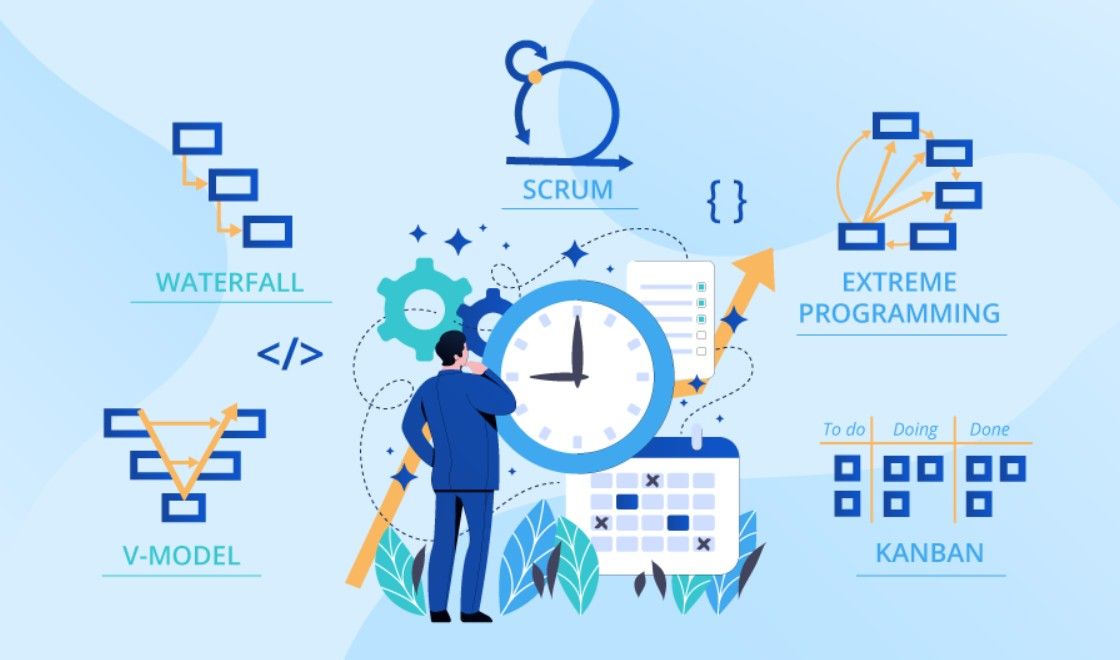
Picture your engineering team building a new application. Right before the beta release, stakeholders suddenly alter the core features. Your deadline remains unchanged, and target users expect flawless performance. This chaotic scenario happens constantly.
Simple to-do lists cannot save you here. Instead, successful project management software development requires a highly organized framework. You need far more than simple task monitoring to survive these hurdles. Your delivery process must link workflows, technical requirements, and team members together. This interconnected approach allows you to release dependable products while handling endless modifications.
The Reality of Delivering Modern Tech Products
Most business leaders assume that building digital products follows a predictable, straight path. In reality, your engineering teams constantly face sudden priority shifts, strict deadlines, and demanding users. Drawing from extensive experience guiding tech agencies across various industries, you will quickly realize that overcoming these hurdles takes far more than simple to-do lists.
Sometimes, building an internal group is not the best route. You might find that software development outsourcing offers significant advantages over maintaining an in-house staff. Whether you manage an external vendor or an internal crew, successful delivery requires a highly organized approach. Effective project management software development connects your workers, technical requirements, and daily routines into one cohesive framework. This unified setup allows you to release dependable applications while seamlessly handling continuous modifications.
The Core Mechanics of Project Management Software Development
Software Development Project Management (SDPM) is the discipline of overseeing the creation and evolution of software. It provides structure and accountability across the software development lifecycle (SDLC), bridging the gap between overarching business goals and engineering execution.
SDPM vs. General Software Project Management (SPM)
While closely related, SDPM and SPM serve different scopes:
-
Software Development Project Management (SDPM): Focuses specifically on building, enhancing, and maintaining software products. Its primary goals are delivering new features, managing code quality, and overseeing the SDLC.
-
Software Project Management (SPM): Encompasses any project where software is at the center, even if it does not involve active coding. This includes broader initiatives like system implementations, legacy data migrations, third-party integrations, and vendor-led rollouts.
Categorizing Software Initiatives
Software initiatives generally fall into diverse categories based on their core objectives, such as:
-
Building a new SaaS platform from scratch.
-
Migrating decades of enterprise legacy data to a secure cloud environment.
-
Integrating healthcare patient records with external APIs for telemedicine.
-
Configuring and deploying third-party e-commerce solutions with software vendors.
The Real Reasons Your Software Delivery Pipeline Breaks Down
Why do so many tech initiatives stall despite having highly skilled developers? You might assume a struggling pipeline points to a lack of talent, but the actual culprit is usually the underlying structure. Guiding diverse tech development through complex builds reveals a hard truth.
Engineers are almost never the true bottleneck. Instead, teams get trapped in flawed frameworks that cannot identify limitations ahead of time. The majority of schedule overruns stem from these structural defects rather than individual performance issues.
Balancing Velocity With Solid Architecture
A widespread misconception suggests that Agile frameworks automatically deliver rapid results and highly productive sprints. In truth, proper project management software development relies on careful team coordination rather than raw speed alone. Pushing for faster output without establishing clear technical boundaries will quickly turn your forward progress into endless revisions. Running sprints without a solid foundation merely generates rapid cycles of duplicated effort. This approach ultimately produces unstable products and buries your organization in operational debt.
Spotting Hidden Roadblocks and Poor Preparation
Typical reporting tools often fail to highlight the symptoms of poor preparation. Instead, these issues emerge as deep-seated workflow jams. Early warning signs appear when developers repeatedly lose context. They will endlessly debate past decisions after the original reasoning vanishes. Progress might also stop entirely due to conflicting ideas about a finished feature. This represents another major red flag. Furthermore, ambiguous approval responsibilities frequently create massive delays among key stakeholders. Finally, your pipeline is likely failing if engineers constantly uncover unexpected tasks right in the middle of active coding phases.
Essential Stages for Delivering Reliable Software
Jumping straight into coding without a structured path usually results in chaotic builds and missed deadlines. When you fail to follow a standard lifecycle, turning basic requirements into a stable product becomes almost impossible. To fix this issue, you must rely on modern tracking tools. These platforms help you organize project management software development across specific stages.
Starting Your Project and Mapping the Strategy
During the initial stage, your team must clearly define the core problem. You need to establish success metrics and examine technical limits to ensure the idea is actually feasible. Once the concept is validated, product leaders turn those high-level goals into concrete steps. You will write specifications, calculate the required effort, and identify task dependencies. Setting clear sprint targets happens here as well. Finally, you should connect user stories with architectural diagrams so everyone shares the exact same vision.
Building the Product and Tracking Daily Progress
The execution phase is where your designers, engineers, and product managers actually handle the app development work. You will manage this work using code reviews, branches, and task tickets. Fast cycles of testing and pair programming help refine your initial strategy as the build progresses. While this creation happens, you must continuously monitor the workflow. Tracking daily progress allows you to highlight obstacles and adjust the project scope as needed. Automated testing and regular stand-up meetings give you an accurate picture of your current timeline.
Final Testing, Release, and Post-Launch Review
Before any feature reaches the user, it must pass through strict quality assurance and documentation checks. During this delivery phase, your team confirms that all acceptance criteria are met. You will also verify final dependencies and prepare the software updates for a live deployment. After the release goes live, you need to evaluate the entire process. Hosting a retrospective meeting helps you identify successful tactics and pinpoint factors that delayed your momentum. This final review ensures your team continuously improves for the next cycle.
Choosing the Best Framework for Your Team
You face a distinct choice when structuring your workflows. You can adopt rigid templates designed for straightforward progress, or you can customize your approach to handle constant shifts within complex environments. The second option is absolutely essential for modern engineering.
Popular frameworks like Agile, Scrum, Kanban, and Waterfall require careful adjustment to fit your specific goals in project management software development. Take Kanban as an example. This method helps reduce team overload effectively. However, it turns into confusing visual clutter if you fail to map out task dependencies. Your chosen framework should bring your team together and reduce potential risks. It must also make the best use of available resources within your unique workspace.
Flexible systems sometimes deteriorate into empty habits over time. When this happens, your Jira boards turn into mere displays of activity. Team meetings shift toward justifying time estimates instead of actually solving problems. You must prioritize clear schemas and redesigned workflows to stop this decline. McKinsey’s 2025 AI survey highlights the financial importance of these actions. The study shows a strong link between redesigned workflows and positive EBIT impact. Furthermore, clear schemas predict business value better than any other measured factor.
Core Rules for Scaling Your Engineering Output
Imagine a frontend developer waiting three days for an API approval while a backend engineer simultaneously builds a conflicting database schema. This frustrating scenario occurs when decision-making processes remain vague. To scale your engineering efforts without exhausting your staff, your strategy for project management software development must explicitly define exactly how and where choices happen.
Charting Dependencies and Resolution Routes
You need to identify sequencing hazards and logic gates long before they stall your release. When you establish distinct workstreams, you stop hidden scope creep from happening. This clarity also prevents engineers from doing conflicting work at the same time. Ultimately, mapping these elements early helps you avoid frustrating integration delays down the road.
Creating One Central Information Hub
Linking your discussions, tests, tasks, and documentation inside one unified workspace cuts down on mental fatigue. This approach prevents different departments from falling out of sync. When you keep quality assurance cycles and technical specifications in a central location, your team bypasses common roadblocks. Everyone instantly understands the exact status of the current build.
Giving Developers Freedom While Keeping Oversight
You must build clear ownership directly into your organizational framework. Instead of only assigning who makes a choice, you should establish strict latency boundaries to enforce accountability for response times. Setting these boundaries gives your engineers the freedom to operate independently. At the same time, this structure maintains strict expectations and provides obvious recovery routes if a deployment fails or partially breaks.
The Impact of AI on Software Delivery Systems
Artificial intelligence is fundamentally shifting the project manager's role. As AI handles data collection and translation, PMs spend less time stitching context together and more time making strategic decisions. Research from the Association for Project Management (2025) shows that 70% of project professionals already use AI in their organizations.
Automating Risk Analysis and Status Updates
AI tools can scan engineering tickets, meeting notes, and Slack threads to instantly flag risks. They can draft sprint briefs using requirements from specs, generate test plans from acceptance criteria, and surface cross-team dependencies, keeping projects perfectly aligned.
Future Outlook: 2025 to 2030
Gartner’s 2024 report urges data and analytics leaders to "bet the business" on AI systems thinking. By 2026, Chief Data and Analytics Officers (CDAOs) will elevate data from a cost center to a growth driver. The future competitive edge lies in ownership of execution logic, supported by strong big data pipeline architecture and managed complexity.
Conclusion
Treating software project management as a static timeline is a recipe for failure. Knowing how to manage a software development team in 2026 means engineering a dynamic, structural execution system that absorbs friction, aligns autonomously, and reveals risk early. By prioritizing systemic clarity over mere task control, organizations can ensure long-term software success and turn complex delivery challenges into a competitive advantage.




Subscribe & get all related Blog notification.




Post your comment