ManageEngine Endpoint DLP Plus is an enterprise endpoint data loss prevention solution that discovers, classifies, and protects sensitive data, controlling USB transfers, cloud uploads, email sharing, and insider threats across every managed device.
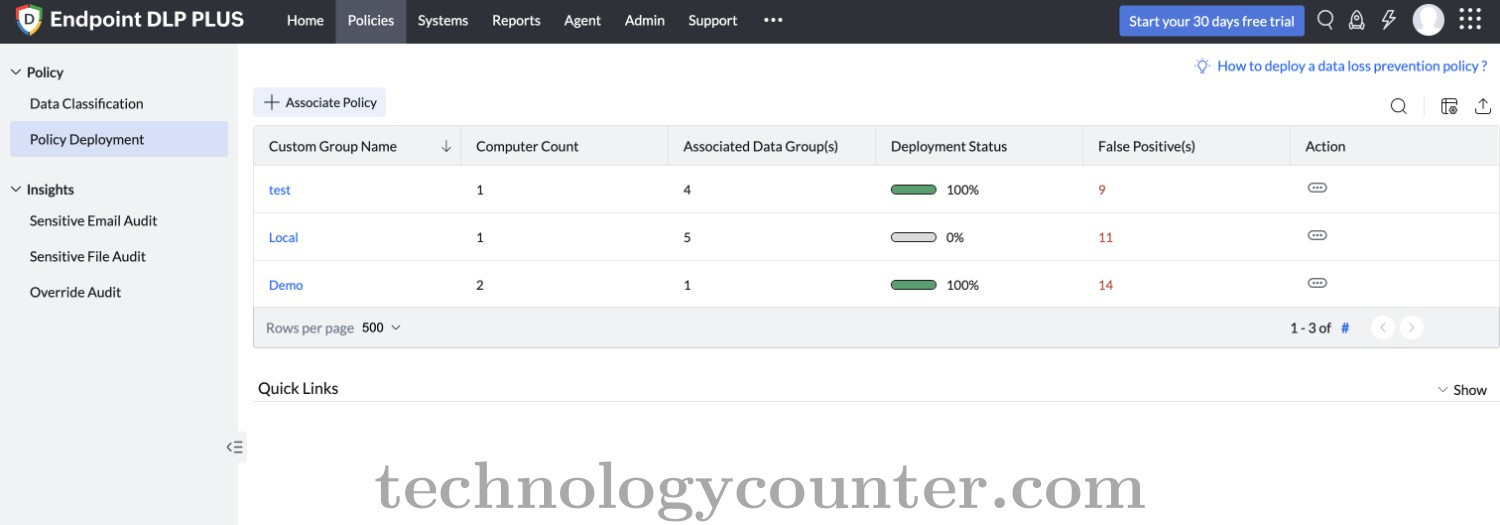
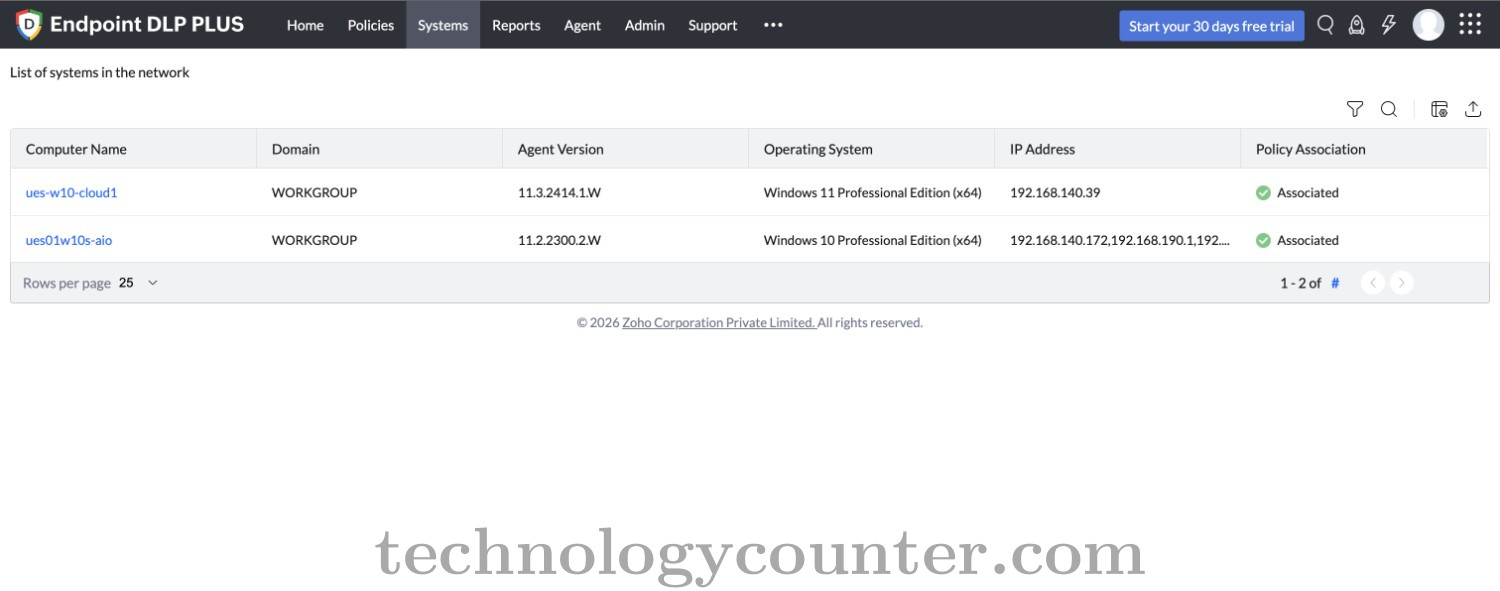
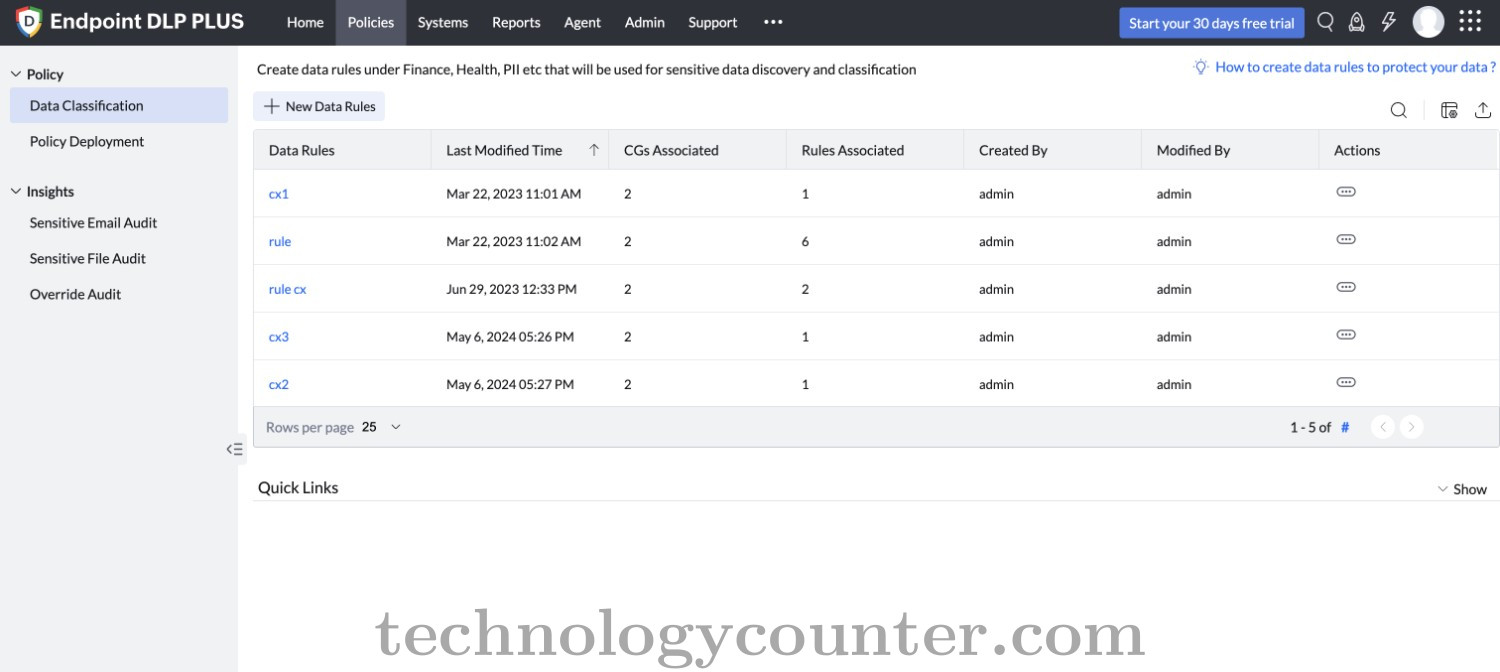
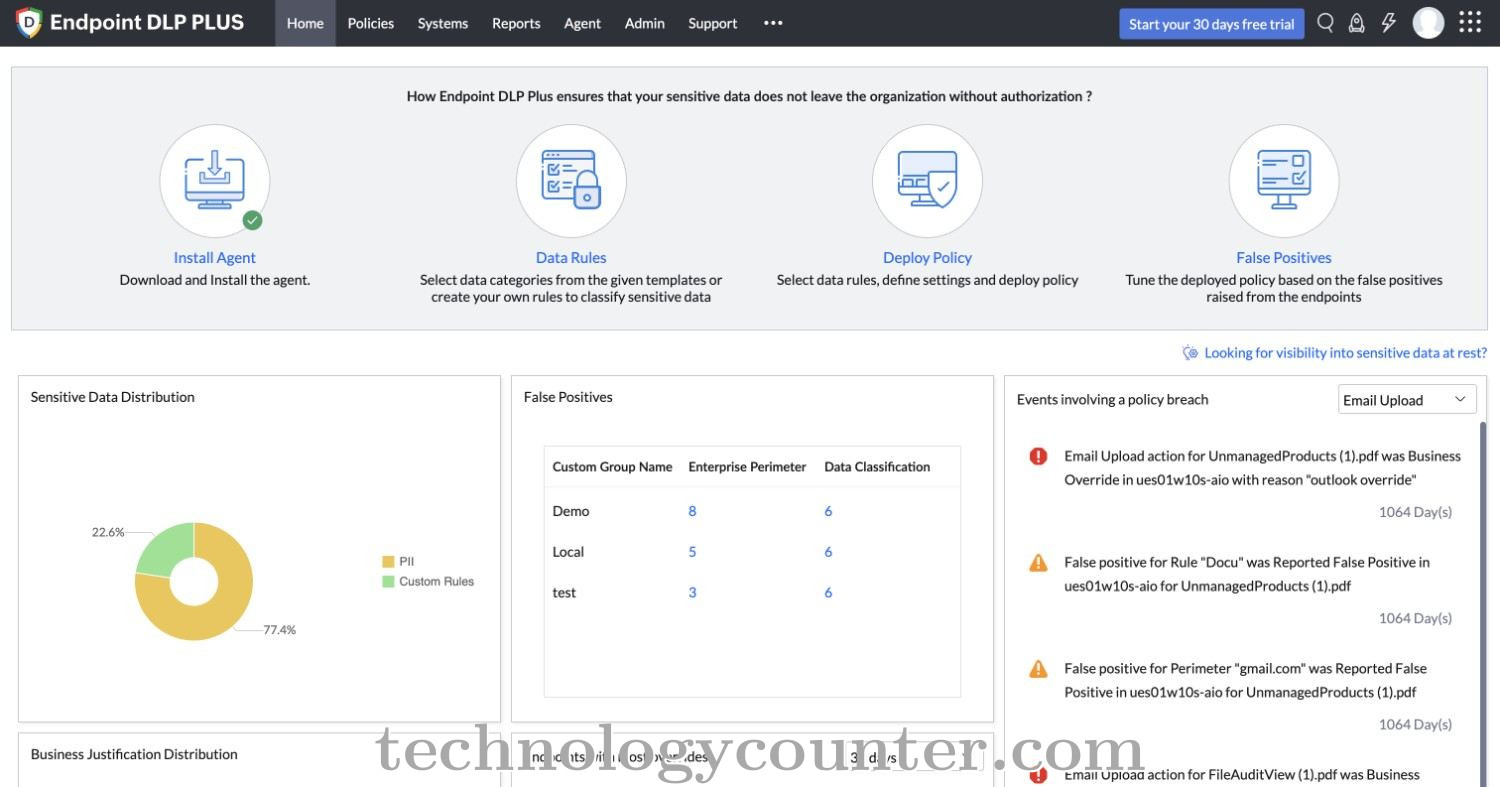
ManageEngine Endpoint DLP Plus is an enterprise endpoint data loss prevention solution that discovers, classifies, and enforces boundaries on sensitive data across every managed device.
It systematically scans structured and unstructured files to locate PII, financial records, health data, and intellectual property, giving IT teams a real inventory of data exposure rather than assumptions.
Once discovered, data is classified using built-in compliance templates or custom detection methods including regex, keyword search, document matching, and fingerprinting, ensuring policies apply intelligently to the right data.
Enforcement policies then control how sensitive data moves, restricting USB transfers, blocking unauthorized cloud uploads, limiting email sharing to trusted recipients, and preventing clipboard and screenshot-based leakage.
Because enforcement happens at the endpoint rather than relying on network-level controls, protection remains active even when devices are offline or outside the corporate network, guarding against both insider risk and external threats like credential-based attacks and malware-driven exfiltration.

Be the first to leave a review for ManageEngine Endpoint DLP Plus
Write a ReviewEndpoint DLP Plus can help protect data such as personally identifiable information, payment card data, health records, financial documents, source code, intellectual property, contracts, and other business-critical files that require controlled access and movement.
It tracks sensitive file actions on managed endpoints, including copies, modifications, uploads, prints, deletions, and transfers. Security teams can review users, endpoints, file names, destinations, timestamps, and policy outcomes to investigate risky behavior.
Yes. Endpoint DLP Plus provides classification, policy enforcement, alerts, and audit-ready reports that help organizations demonstrate how sensitive data is protected across endpoints.
Yes. Because policies are enforced directly on the endpoint rather than at the network layer, restrictions on file transfers, USB access, and application usage remain active even when the device is disconnected from the corporate network or operating remotely.
Yes. Admins can scope classification rules and enforcement policies to specific users, devices, or groups, so a finance team's restrictions on financial documents can differ from an HR team's restrictions on employee records, for example.
The attempted action, such as copying a restricted file to USB or uploading it to an unapproved app, is blocked in real time. Depending on how the policy is configured, the employee may see a block notification, be prompted to provide justification for an exception request, or have the incident logged for admin review.
 Write a Review