Why Enterprises Are Replacing Off the Shelf Tools with AI

 20 Apr 2026
 Reading Time : 5 Minutes
As AI adoption accelerates, enterprises are moving away from generic off-the-shelf tools toward custom-built software tailored to their unique workflows and data ecosystems. This shift is driven by the need for better integration, data control, scalability, and competitive differentiation. AI-powered custom software enables organizations to build proprietary systems that deliver long-term value and strategic advantage.
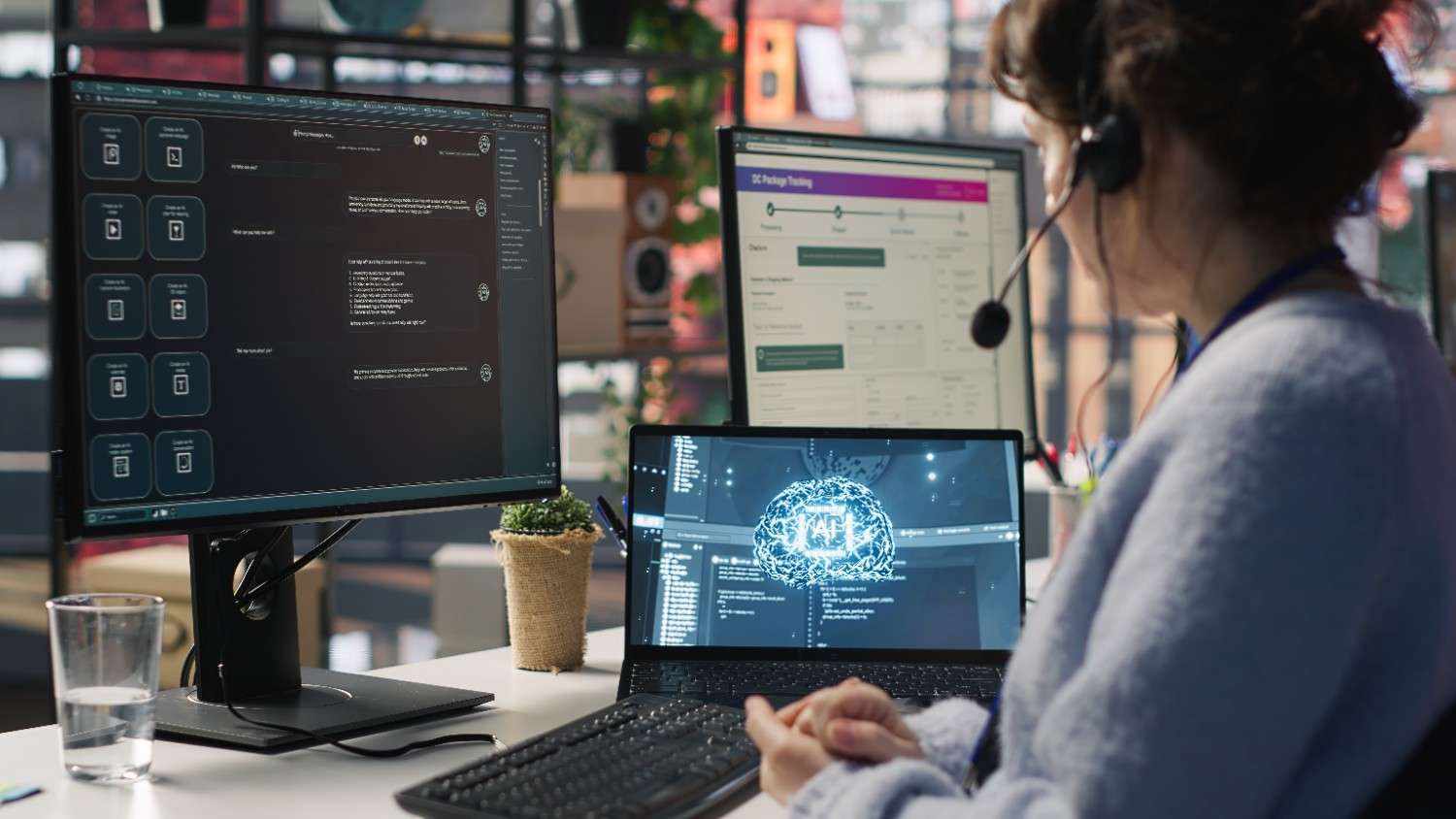
The era of "good enough" software is ending. In 2026, the demand for tailored digital infrastructure has moved from a luxury for tech giants to a survival requirement for the midmarket and enterprise.
According to Research and Markets, the global custom software development market is projected to reach $65.85 billion in 2026. The market is growing at an aggressive compound annual rate of 22.1%. This isn't just a bump in spending, but a clear structural pivot. Researchers further forecasts that AI software spending alone will exceed $450 billion this year.
So, if you are still buying a tool that your direct competitor can also buy for $50/seat, you aren't gaining an advantage. You are paying for a baseline. The AI tools themselves haven't necessarily changed, but the landscape has shifted beneath them. That’s because of AI, which is the need of the hour, and it thrives on proprietary context.
Companies are realizing that "software" is no longer a collection of components or a few thousand lines of code. It is an architecture problem. If the architecture isn't optimized to handle the future of AI, data flow, and security, the application is legacy code before it even launches.
This realization has driven a surge in the need for partners who understand the "how" and "why" of building from the ground up.
This points to a broader shift in what "outstanding" means in today's AI-driven landscape. It's no longer about feature-rich platforms or well-integrated SaaS stacks. It's about how deeply software is engineered around a company's unique context, data flows, and decision-making logic.
Why AI is Driving Custom Software Development
The shift toward custom builds isn't a trend. It is a response to the technical limitations of generalized models. Here’s why artificial intelligence is driving more companies towards custom software development.
Integration Hassles
Off-the-shelf tools often operate as silos. They offer APIs, but those APIs are built for the vendor's convenience, not your workflow. When you introduce AI, integration becomes a high-stakes game of data movement. If your AI agent needs to access three different SaaS tools to resolve a customer query, you face latency, token costs, and broken handoffs. A custom build eliminates the "glue code" entirely. The AI is built into the core logic, not bolted onto the side.
Data Sovereignty
In a regulated environment, ‘where your data lives is’ as important as ‘what it does’. General purpose AI tools often require data to pass through external servers or participate in model training for the vendor's benefit. For many enterprises, this is a non-starter and several high-performance organizations are increasingly developing in-house custom solutions to maintain absolute control over their intellectual property.
Proprietary is the Moat
If two insurance firms use the same off-the-shelf AI tool to process claims, they will eventually have identical margins and identical customer experiences. There is no moat in a subscription. Custom software allows you to encode your specific business logic (the "secret sauce" of how you operate) directly into the model’s weighting and the application’s flow. This creates a competitive barrier that cannot be replicated by simply buying a license.
The Shift in Build vs. Buy Economics
Pratik Mistry, EVP – Technology Consulting, at the software development company Radixweb, in an interview explained that earlier when businesses made the build vs. buy decision, the upfront cost of custom development was a big deterrent. “However modular frameworks and AI-assisted coding have slashed time-to-market,” he explains. When you factor in the "SaaS tax", which is the per-seat licenses that never end and the cost of building workarounds for missing features, custom software often shows a superior Total Cost of Ownership (TCO) within 36 months. You are building an asset for the balance sheet, not an ongoing expense for the P&L.
Contextual Precision and Hallucination Control
Generic AI tools are prone to hallucinations because they lack specific boundaries. They are trained to be generally helpful, not specifically accurate for your inventory or your legal precedents. A custom build allows for the implementation of strict retrieval-augmented generation (RAG) pipelines and "Human-in-the-loop" checkpoints. You define the guardrails like security standards, identity management, and specific data policies. This level of granular control is impossible when you are working within a vendor’s pre-set sandbox.
The transition from "buying" to "building" reflects a broader market truth: in the AI age, the
infrastructure is the strategy.
What This Shift Means for the Broader Market
The market is currently flooded with "AI agencies." Every other tech founder is now running a firm that promises to build whatever you need. But there is a massive gap between patching together a few lines of code and building an enterprise-grade system.
Here is the thing: a simple wrapper says nothing about scalability, security, or compliance. Most of the prototypes look good in a demo, but cannot support a global rollout, ensure zero trust security, or handle the complexities of multi-region data residency.
The market shift requires a transition from "hiring a vendor" to "finding the right partner." You need a team that understands that software development is an engineering discipline, not a creative writing exercise. This is why peer reviews, industry accreditations, and awards matter more than ever. They are proxies for reliability.
A closer look at the development firms consistently recognized for engineering excellence reveals a clear pattern: they don't rely on tweaking off-the-shelf tools or stitching together APIs as a long-term solution. Instead, they focus on building fully custom, AI-ready systems from the ground up. That distinction matters, because outstanding software increasingly reflects custom engineering, not generalized tools.
So, when choosing a partner, look for evidence of sustained excellence. Examine how they handle edge cases, how they secure their data pipelines, and how they've been reviewed by the industry. If you are betting the future of your company on a piece of software, make sure it's a piece of software you actually own, built by people who have proven they know how to build it.




Subscribe & get all related Blog notification.




Post your comment