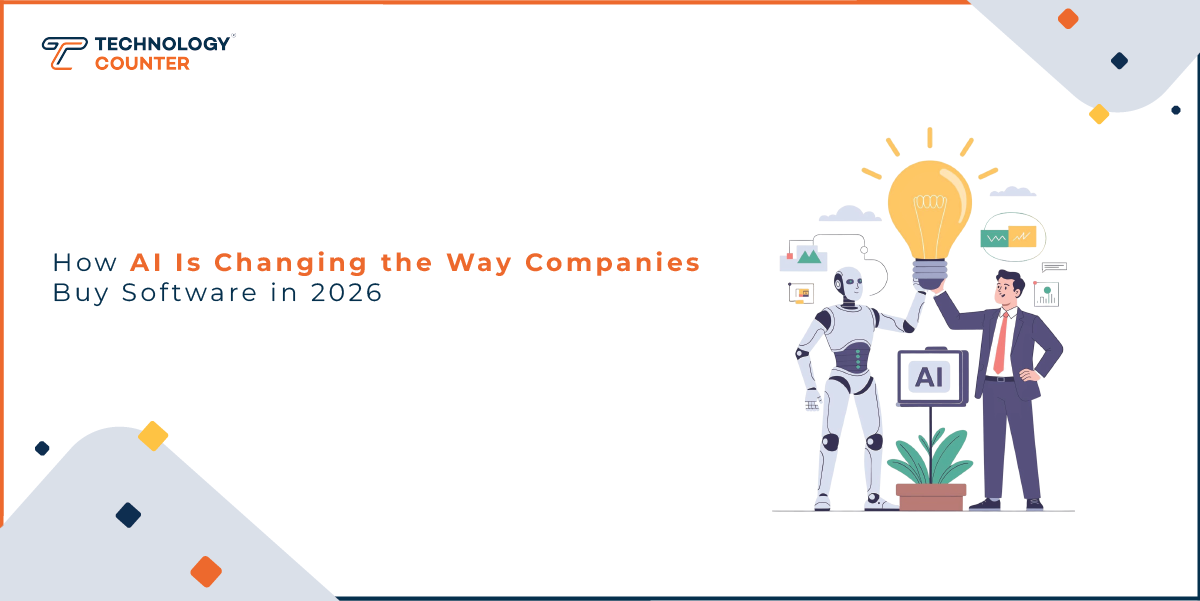
The software buying process has evolved a lot during the last couple of years. In the past, firms relied on vendor meetings, product demos, and long sales cycles to evaluate software solutions. Today, Artificial Intelligence (AI) is reshaping this process, allowing enterprises to find, evaluate, compare, and buy software more efficiently than ever before.
As Artificial Intelligence Software technologies evolve, software buyers may now utilize personalized recommendations, predictive insights, and automated evaluations to facilitate decision-making. AI can scan massive volumes of data and assist businesses in finding the software solutions that meet their demands, budget, and operational goals.
This change is not only transforming the way corporations buy software, but also the way software providers market and sell their products. Artificial Intelligence enables suppliers to give a more personalized experience, relevant material, and engage potential buyers at every step of the shopping cycle. Artificial Intelligence is thus becoming a key element in current software acquisition and commercial technology decision-making.
Research on AI-Based Software Is Booming
Today’s buyers do a lot of research before they engage with a seller. Decision-makers are supported in finding the right solutions for their individual needs through AI-powered search engines, recommendation engines, and software marketplaces.
Buyers don't need to manually sift through dozens of items to get the right one. AI technologies analyze business needs, company size, industry, budget, and desired features to offer specialized software suggestions.
Main Benefits:
-
Quicker software discovery
-
Customized recommendations
-
Less time on research
-
Better decision-making accuracy
-
More Intelligent Software Comparisons
Smarter Software Comparisons
Comparing software solutions can be tricky, particularly when comparing various providers across different categories. This process is made easier by AI, which analyzes product features, pricing, user reviews, integrations, and performance indicators.
Today, several software review sites are leveraging AI to distill user reviews, uncover recurring strengths and problems, and highlight major differentiators between competing solutions.
This allows purchasers to make smarter choices without having to spend hours and hours reading reviews and product documentation.
Predictive insights for better decision making
AI can evaluate historical purchase trends and market patterns to anticipate which software solutions are most likely to fulfill a company's needs.
Among today's most impactful AI trends is predictive analytics, which enables AI to examine historical purchase trends and market patterns to forecast the software solutions most likely to address a company's specific needs.
For instance, an AI-enabled procurement platform may suggest a specific CRM or ERP solution after analyzing the success rates of similar firms in the same industry.
These predicted insights reduce risk and let companies invest in software that produces long-term value.
Automating Vendor Evaluation
Evaluating software vendors typically involves looking at things like compliance requirements, security certifications, customer support capabilities, and financial soundness.
AI-powered systems can be used by procurement teams to automatically evaluate vendors against established criteria to assist them in shortlisting qualified suppliers more efficiently.
This automation accelerates the review process without sacrificing consistency and precision.
Tailored Buying Experiences
Personalized experiences are what today’s software buyers want. With AI, suppliers may provide relevant information, product recommendations, and educational materials based on a buyer’s behavior and interests.
From smart chatbots to tailored email campaigns to dynamic website experiences, AI allows vendors to engage prospects with the appropriate information at the right time.
This means buyers get more relevant assistance throughout their buying process.
Procurement & Contract Management with AI
But AI is not just changing the way people discover and evaluate software; it is also changing procurement practices.
Organizations are turning more and more to AI-driven procurement platforms to:
These abilities assist companies in cutting expenses and increasing the efficiency of procurement.
Issues to be Addressed
AI has great advantages, but enterprises need to be aware of the potential problems:
Quality of data
AI suggestions are only as good as the data they are built on. Bad data leads to bad suggestions.
Openness
Organizations should understand how AI-based recommendations are generated and not just depend on automated suggestions.
Human Monitoring
AI should augment decision-making, not supplant it. Complex software investments still require human knowledge.
The Future of Buying Software
The evolution of AI technology will provide more intelligent and automatic software purchases. Buyers would benefit from more precise advice, more market insights, and speedier procurement processes.”
For software companies, success will depend on adjusting to AI-driven buyer behavior with transparency, personalization, and education that adds value.
Companies that use AI-powered software for buying will be better at investing in technology and making decisions, which gives them a competitive advantage.
Conclusion
At its heart, artificial intelligence is transforming the way firms buy software. AI is enabling enterprises to make smarter purchase decisions faster than ever before, from personalized recommendations and automated comparisons to predictive insights and procurement automation.
As software marketplaces continue to get more competitive and complicated, AI will be more vital in matching buyers with solutions that best fit their company's needs. Those organizations that embrace these capabilities will be best placed to promote development, efficiency, and long-term success in the digital age.

 12 Jun 2026
 Reading Time : 4 Minutes





Post your comment